
The Art of Public Begging
On Prospecting
Cold calling doesn't need a better script. It needs an honest name.
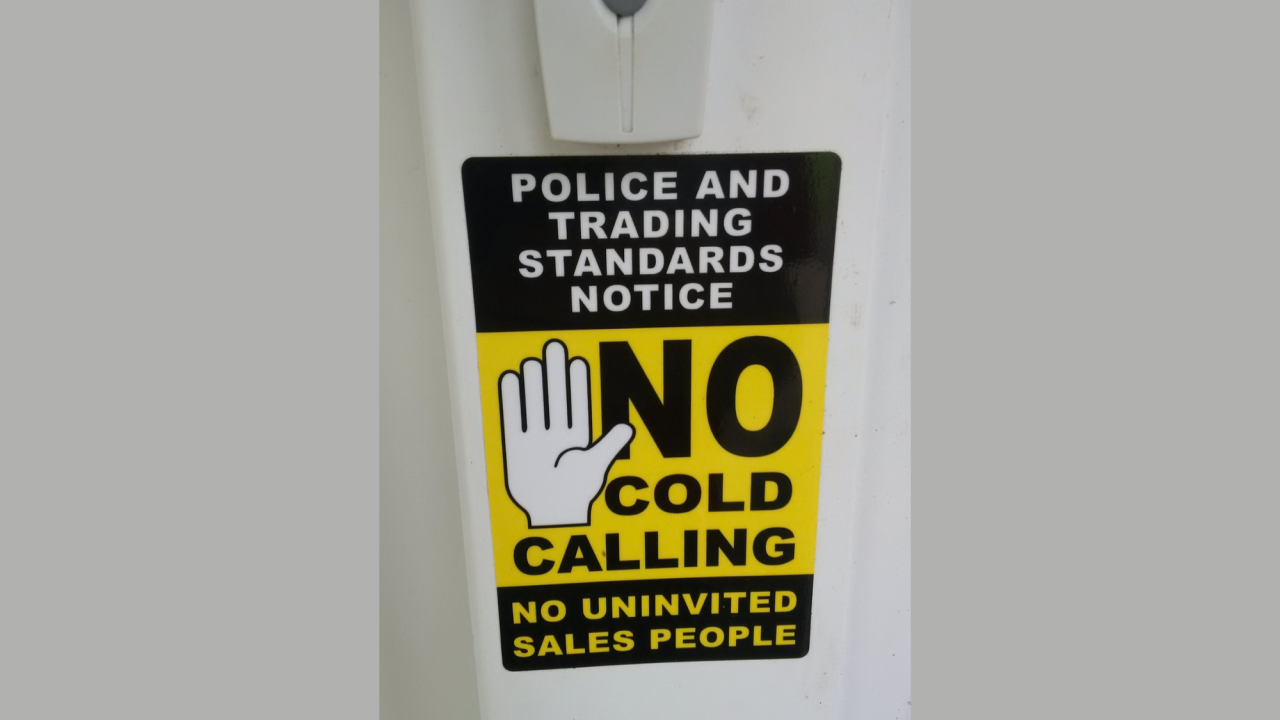
Strip away the frameworks, the traits, the acronyms, and one sentence survives: a stranger interrupts another stranger's day to ask for something the second stranger did not offer. That is the whole transaction. Every five-step methodology, every voicemail template, every carefully rehearsed pattern interrupt is decoration on top of it. And once you see the decoration for what it is, you can't unsee it: cold calling is public begging, professionalised, gamified, and taught in academies with a straight face.
I want to be precise here, because precision is the one thing this industry keeps sacrificing for energy. I am not saying cold calling doesn't work. It plainly does, for people disciplined enough to survive its ratios. 48% of B2B salespeople are afraid of it, and the ones who aren't tend to close more business than the ones hiding behind email sequences. I'm not arguing with the mechanics. I'm arguing that the mechanics are impertinent, and that working has never been the same claim as being welcome.
This piece is aimed at one case in particular: Benjamin Dennehy, the trainer who markets himself as "the UK's most hated sales trainer." I'm picking Dennehy because he doesn't hide behind soft language the way the rest of the industry does. He says the quiet part out loud, in his own words, and in doing so he hands us the clearest possible specimen to examine.
The five-step methodology is a beggar's routine with better lighting
Take the popular framework doing the rounds: Confirm, Break, Value, Tie-In, Close. Read it plainly and it says: find out if this stranger controls money (Confirm), needle them about their current dissatisfaction before they can object (Break), state your worth in one breath because you have maybe fifteen seconds before they hang up (Value), explain why they personally should care (Tie-In), and ask for the only thing you actually wanted from the start — a few more minutes of their attention, tomorrow (Close).
That is not sales architecture. That is a stranger asking a stranger for change on a street corner, broken into five teachable beats and sold back to salespeople as a methodology. The scripting doesn't change the shape of the ask. It just makes the ask survivable to repeat sixty times a day without flinching.
And the flinching is the real target of most cold-calling training. Look at what's actually being taught underneath the scripts: play two roles, "The Entertainer" and "The Expert," and display four traits — assertive, extroverted, optimistic, confident — inside a conversation that lasts, by design, only a few minutes. None of that changes what is being requested. It changes how bearable it is to request it, over and over, in the face of a 96% no. Confidence doesn't change the transaction. It just makes it survivable to perform daily.
Confidence doesn't change the transaction. It just makes it survivable to perform daily.
Even Dennehy's honest version is still an ask
To his credit, Dennehy has stopped pretending the interruption isn't an interruption. He mocks the advice going around — never open with "this is a cold call," be warm, be soft, disarm them — calling it exactly the platitude it is. His own opener is the opposite: "This is a cold call." Dennehy's argument is that naming the call removes the guessing game, and the prospect relaxes because the trick has been taken off the table. As he puts it, "people relax because you removed the guessing game."
I respect Dennehy's honesty more than the industry's disguise. But naming the interruption doesn't retire it — it just relocates the argument. The question stops being "is this deceptive" and becomes "is this consented." A busker who shouts "this is a busk" before playing hasn't stopped busking. He's simply removed your ability to pretend you didn't know what was happening when he holds out the hat. Dennehy hasn't solved the impertinence. He's just stopped apologising for it.
What Dennehy's own words give away
The most revealing line I've read on this subject didn't come from a critic of cold calling. It came from Dennehy himself, proud of having mastered the thing. "I had a dream, to never have to cold call," he writes. "I achieved that dream." He describes building a career on it, getting brutally good at it — and then, the day he no longer needed the income it produced, walking away from it entirely. He doesn't call this a contradiction. He calls it the goal.
Sit with that. A discipline Dennehy was good enough to teach, defend, and monetise for years, abandoned the moment he no longer required the money it generated. He says it himself: "I don't have to cold call — but I choose to." That isn't a testimonial for cold calling. That's a confession about it. It is the exact posture of a dealer who tells the next generation to keep working the corner until they've banked enough to get out — sincere advice, delivered by someone who has already left the version of the job he's recommending to you. If the practice were actually respectable, Dennehy — the person best at it in his own telling — wouldn't have treated quitting it as the finish line.
Society has already delivered its verdict
You don't need my argument for this. You need to look at what's been legislated. Do-not-call registries. Spam filters. Ad blockers. Caller ID built specifically so people can screen you out before you speak. None of that infrastructure exists to stop welcome contact. It exists because the collective, measurable, legislated public verdict is that uninvited interruption is unwanted — wanted so little that governments wrote laws and entire industries built products whose only function is keeping it out.
And here is the detail the frameworks never sit with: the people doing the interrupting already know this. Dennehy states it himself, plainly, as a precondition of the job: "Accepting that 90% of calls would go nowhere." He knows the ratio going in, and persists anyway. That isn't resilience. That's an admission. It says, in plain terms, that Dennehy's need for the meeting outweighs the other person's stated and repeated preference not to be contacted. Persisting past that much rejection isn't a sales skill. It's a hierarchy of needs with someone else's time placed beneath your own quota.
Banksy made the same argument about billboards, years before anyone needed to make it about telephones. Advertisers interrupt you in public, uninvited, at scale — and trademark and copyright law then forbid you from touching what they've put in front of you, while placing no equivalent obligation on them to ask first. As he put it, "they are The Advertisers and they are laughing at you." Cold calling is the same asymmetry with a dial tone instead of a billboard: the caller needs no permission to interrupt, but the person interrupted has no standing to refuse in advance — only the exhausting business of refusing one call at a time, forever.
Where this logic ends if everyone adopts it
The belief propping up cold calling was never "phones work." It's colder than that: interruption at scale is acceptable, provided it's disciplined enough to be profitable. That belief doesn't stay contained to sales floors. It generalises.
Once every channel of human contact — restaurants, childcare, sport, music, medicine, dating, transport — has been colonised by somebody else's quota, the casualty isn't attention. It's trust, at civilisational scale. You stop answering unknown numbers not because you're rude, but because you've learned that the ratio of stranger-with-quota to stranger-with-something-you-need has flipped. That is the future this belief builds if nobody names it: not a world with more sales, but a world with less trust left to spend on anything, sold to us one disciplined, well-scripted interruption at a time.
Cold calling isn't wrong because the people doing it are unskilled. Dennehy is proof it can be mastered completely — and he's also proof that even the best of them leave the moment they're free to. It's impertinent because mastering the interruption was never the same project as earning permission for it — and only one of those two things was ever worth building a business, or a reputation, on.
Chris Arnold writes The Brand Within — a case for character over competence in an industry built to sell you the opposite. thebrandwithin.me


Comments